- Energy System Info
Electrolyser
Renewables
Decarbonisation
- Services Info
Technical services
Energy Security
AI supported monitoring
Energy Trading
- Support Info
- More INFO
An In-depth Exploration of the Mechanisms and Applications of Electrolysis
An electrolyser is a crucial apparatus employed in the process of electrolysis, a technique utilizing electrical energy to induce a non-spontaneous chemical reaction. This device is primarily utilized to decompose water into its fundamental elements—hydrogen and oxygen. Electrolysers are instrumental in generating hydrogen gas, serving as a clean and sustainable energy carrier essential to various industrial processes and the burgeoning hydrogen economy.
There are several types of electrolysers, each with distinct characteristics and applications:
The operational principle of an electrolyser centers around the process of electrolysis. The following is a detailed breakdown of its functioning:
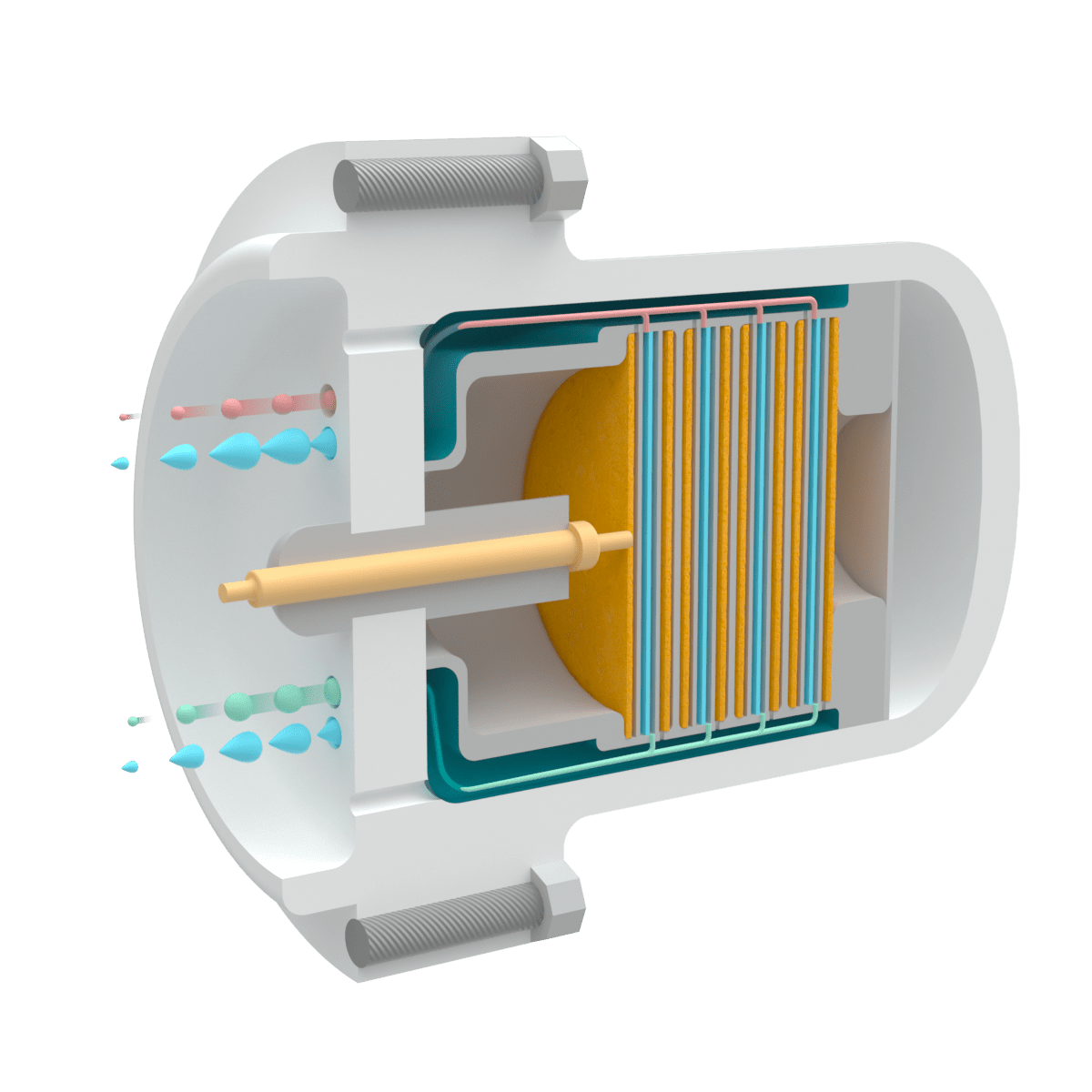
An electrolyser typically comprises the following components:
The overall chemical reaction for the electrolysis of water can be represented as:
2H2O(l) → 2H2(g) + O2(g)
This reaction encompasses the following half-reactions:
Electrolysers have a broad spectrum of applications across various industries:
With the increasing emphasis on renewable energy and decarbonization, electrolysers are poised to play a pivotal role in the global energy transition. Advancements in technology, reduction in costs, and scaling up of electrolyser capacities are key factors that will drive the widespread adoption of this technology.
In conclusion, electrolysers are invaluable devices that not only facilitate sustainable hydrogen production but also support various industrial processes, paving the way for a greener and more sustainable future.